top of page


Culture & Technology Studio II
Faculty of Information, University of Toronto
Postgraduate - WINTER 2026
This project-based course (INF1512H – Culture & Technology Studio II) will serve as the keystone experience for the C&T concentration. In this course, students will develop a detailed proposal and plan for an individual creative-scholarly project relating to the digital contemporary, then execute their plan. Students might produce work in a wide range of media including podcasts, art installations, digital stories, textile fabrications, physical computing projects, games, books and/or publications, creative non-fiction or essay writing, poetry, fiction, and inter-artistic or inter-disciplinary creations. Sessions will be devoted to mutually supportive co-working in a studio environment and to peer and instructor feedback. The students will work together (in consultation with the instructor) to curate and design in an exhibition and/or showcase of projects to complete the course. The course will also address the demands of hands-on studio work by incorporating project management skills including prototyping, iteration, and process documentation.
Queer G.L.A.M.
Faculty of Information, University of Toronto
Postgraduate - WINTER 2024, 2025, 2026
This course (INF2226H — Queer GLAM) provides an introduction to queer experiences and queer studies — including intersections of race, gender, and sexuality – within the context of Galleries, Libraries, Archives, and Museums (GLAM). The purpose of this seminar is to examine, synthesize, and understand a range of critical pressure points that have been central to queer experiences in the context of cultural heritage institutions, public history, community outreach, and “information labor” and “knowledge work.” Conversely, we will ask, how do GLAM institutions shape queer identity, activism, sociability, sex, art, and politics?

Critical Infrastructures
Faculty of Information, University of Toronto
Postgraduate - FALL 2025
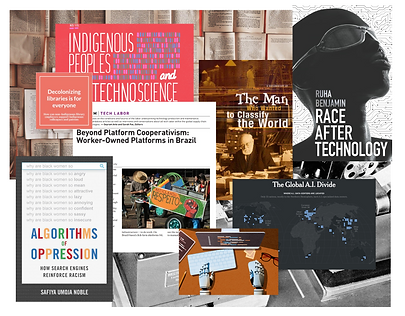
Infrastructures are ecologies of numerous systems, each with unique origins and goals, which are made to interoperate by means of standards, socket layers, social practices, norms, and individual behaviours. This course (INF1324H — Critical Infrastructures) examines how information infrastructures form, how they change, and how they shape (and are shaped by) social and cultural forces. Particular focus is paid to libraries, archives, scientific research practices, the Internet, the World Wide Web, and cyber-infrastructures. The course includes an examination of the role of standards, such as library catalogues, classification systems, TCP/IP, HTML, and metadata standards, and changing social structures and knowledge practices, such as scientific disciplines, professional societies, and universities. Finally, the course engages with broad theories of infrastructure and foreground the usually hidden aspects of infrastructures, be they material, informational, or structural.
Text Examination: Direction & Dramaturgy
The Creative School (Performance), Toronto Metropolitan University
Undergraduate - FALL 2024, 2025
The purpose of this course (THF402 — Text Examination: Direction & Dramaturgy) is to understand both the critical and creative make-up of a film screenplay, television pilot, and theatrical play. Through reading and discussions of the course material, students will gain both a classical and practical sense of dramaturgy, direction, and writing. Students will critically analyze scripts across disparate mediums, screen their associated films and episodes, and then re-analyze the texts. Through this, students will gain a better understanding of structural, practical, and creative differences between plays and screenplays as they reflect contemporary practices in theatre creation, filmmaking, and television production. Students will also learn to compare and contrast scripts as read and as performed, unravelling the role of the writer, director, and actors in the creative process.


Senior Seminar: Special Topics on Media and Arts
Department of Arts, Media, and Culture, University of Toronto
Undergraduate - SUMMER and FALL 2022
This interdisciplinary seminar course explores the collusion between new and computational media and artistic practice. Students will be introduced to a wide range of contemporary artistic methods and critical theories that emphasize creative engagements with various media forms. Central themes of inquiry include virtual and augmented reality works, artificial intelligence art, algorithmic art, virtual dance and motion capture, electronic literatures, intermedial performance, and digital media. Through student-led seminar presentations, in-class debates, and experiential practice-based engagements with creative technologies, this course will interrogate the theory-praxis divide through a series of critical frameworks — queer, feminist, critical race, and anti-colonial — and illustrate how intermedial approaches to the arts challenge (and transform) existing practices, disciplines, and ways of expression. Particular focus will be made on the relationship between artistic praxis, humanities research, and public intervention, towards the framing of art as “aesthetic action” (Robinson 2016) to explore the sociopolitical affects of aesthetic and sensory interventions.
bottom of page